Silverfish are small, wingless insects that are often found in dark, humid and undisturbed areas of homes and buildings. Around Hervey Bay and coastal Queensland, silverfish activity is often linked to moisture, humidity, storage areas, cupboards, wardrobes, roof voids, bathrooms, laundries, books, cardboard and paper-based materials.
Silverfish are not dangerous in the same way as biting or stinging pests, but they can damage stored items. They may feed on starches, glues, paper, cardboard, books, wallpaper paste, photos, natural fabrics and other materials. Silverfish are also a warning sign that a room, cupboard or storage area may have excess moisture, poor airflow or too much undisturbed clutter.
NoTrace Pest Control provides silverfish treatment across Hervey Bay and the Fraser Coast for homes, rental properties, storage areas, roof voids and suitable commercial sites.
How to Identify Silverfish
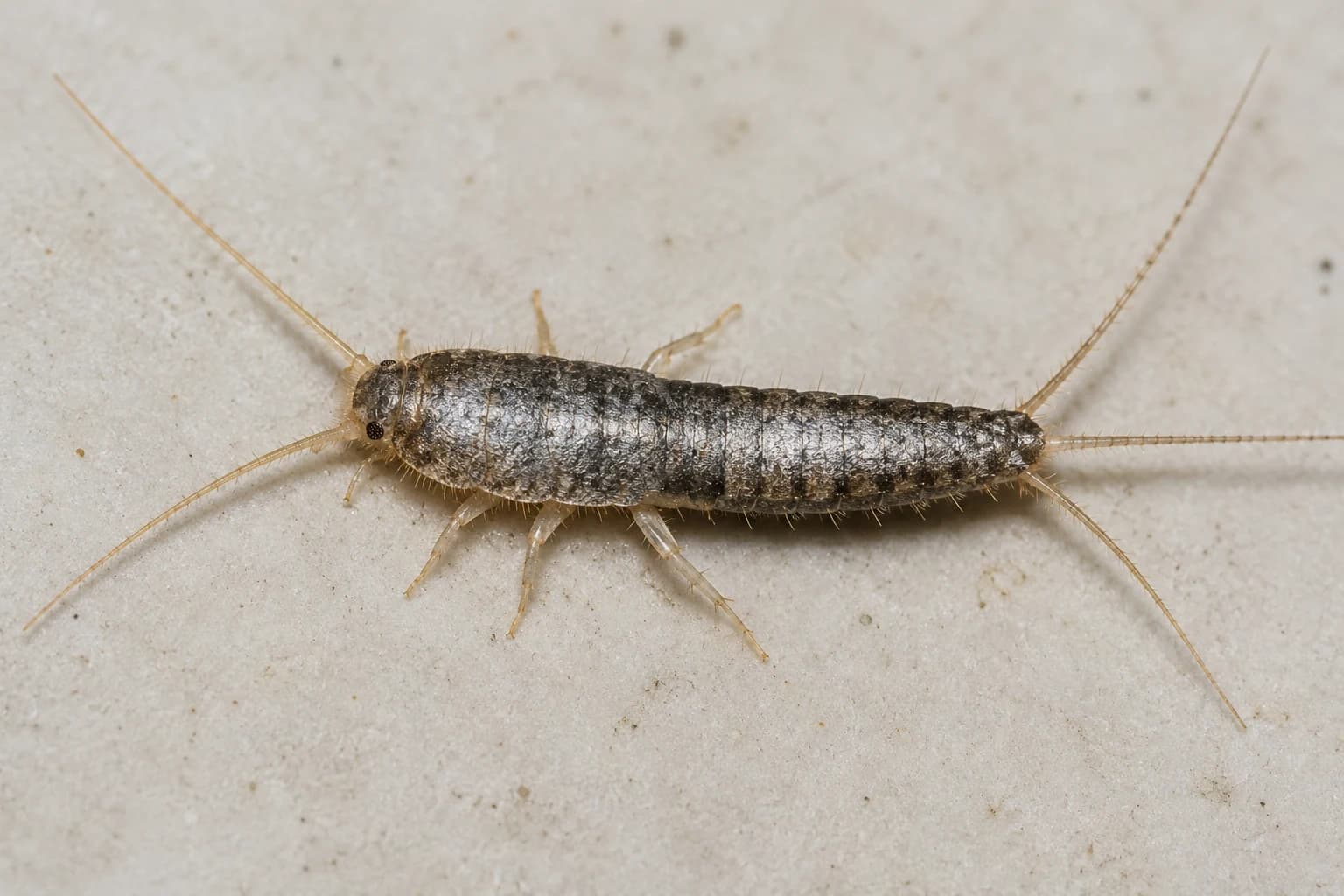
Silverfish are primitive, wingless insects with long antennae and tail-like filaments at the rear of the body. They usually move quickly and avoid light, which is why they are often seen when a cupboard, box or bathroom light is turned on.
Common silverfish identification features include:
- Small, flattened body
- Wingless insect
- Long antennae
- Three tail-like filaments at the rear
- Fast, wriggling movement
- Fish-like body shape
- Silver, grey, brownish, mottled or dull colouring, depending on the type
- Usually active at night
- Often found in humid, dark or undisturbed spaces
Silverfish are usually found in cracks, crevices, narrow gaps and protected storage areas. They may be difficult to spot during the day because they hide from light. Globe Pest Solutions describes silverfish as small, wingless insects with an elongated, tapered body, silvery-grey scales and fast wriggling movement.
Common Silverfish and Similar Pests in Queensland Homes
Common Silverfish
The common silverfish is the classic silver-grey household pest people usually think of when they find silverfish in bathrooms, cupboards or storage boxes.
How to identify common silverfish:
- Silver-grey body
- Tapered, fish-like shape
- Long antennae
- Three long tail filaments
- Fast wriggling movement
- Usually avoids light
Where they are usually found:
- Bathrooms
- Laundries
- Cupboards
- Wardrobes
- Bookshelves
- Roof voids
- Linen cupboards
- Storage boxes
- Behind skirting boards
- Around paper, cardboard and books
Why they are a problem:
Common silverfish can damage paper, books, cardboard, photos, stored documents, wallpaper paste and some fabrics. They are especially frustrating in cupboards, storage areas and rooms where items are left undisturbed for long periods.
Grey Silverfish / Long-Tailed Silverfish
Grey silverfish, also called long-tailed silverfish or paper silverfish, are similar to common silverfish but often appear dull grey, larger and more heavily bristled. They are known overseas and increasingly discussed as a structural and paper-material pest in buildings.
How to identify grey silverfish:
- Dull grey to mottled grey body
- Often larger than common silverfish
- Long antennae
- Long tail filaments
- Hairier or more bristly appearance
- Fast-moving and light-avoiding
Where they are usually found:
- Roof voids
- Wall gaps
- Storage rooms
- Bookcases
- Cupboards
- Archives
- Paper storage areas
- Wardrobes
- Behind skirting boards
- Warm, dry-to-humid indoor spaces
Why they are a problem:
Grey silverfish can damage paper-based materials, books, documents, cardboard, adhesives, wallpaper and stored items. They may be harder to notice early because they hide in building voids and undisturbed storage areas.
Firebrats
Firebrats are close relatives of silverfish. They look similar but usually prefer warmer areas. They may be found around hot water systems, roof voids, warm wall cavities, kitchens, bakeries, laundries and heated spaces.
How to identify firebrats:
- Mottled grey, brown or tan body
- Similar body shape to silverfish
- Long antennae
- Three tail filaments
- Fast movement
- Often found in warmer areas than typical silverfish
Where they are usually found:
- Hot water systems
- Roof voids
- Warm wall cavities
- Kitchens
- Laundries
- Bakeries
- Commercial food areas
- Near heaters, ovens or warm equipment
Why they are a problem:
Firebrats can feed on starchy materials and stored goods, similar to silverfish. They are more likely to be linked with heat, as well as shelter and food material. The firebrat is described as similar to a silverfish but with a mottled grey and brown body.
Four-Lined Silverfish and Similar Bristletails
Some silverfish-like insects have more obvious striping or markings along the body. Homeowners may simply notice them as “striped silverfish” or “bristletails”.
How to identify striped silverfish-like pests:
- Elongated body
- Long antennae
- Three tail filaments
- Grey, brown or patterned appearance
- May have lengthwise stripes or markings
- Moves quickly and hides from light
Where they are usually found:
- Storage areas
- Roof voids
- Wall gaps
- Garages
- Cupboards
- Paper storage
- Around books and cardboard
- Undisturbed indoor areas
Why they are a problem:
Striped silverfish-like pests can be mistaken for ordinary silverfish. They may still damage paper, stored materials and natural fibres, so the practical treatment approach is often similar: inspect, reduce moisture and clutter, and treat harbourage areas where suitable.
Outdoor Bristletails
Some bristletail-like insects live outdoors in natural habitats and are not the same as indoor silverfish infestations. These may be found in leaf litter, bark, logs, garden debris or damp outdoor areas.
How to identify outdoor bristletails:
- Small, primitive-looking insects
- Long antennae
- Tail filaments
- Often dull grey or brown
- Found outdoors rather than inside cupboards or bathrooms
- May jump or move quickly depending on type
Where they are usually found:
- Leaf litter
- Bark
- Logs
- Garden beds
- Damp soil areas
- Mulch
- Bushland edges
- Outdoor storage
Why they are usually lower concern:
Outdoor bristletails are usually part of the natural environment and are not always a household pest issue. If they are repeatedly appearing indoors, it may indicate moisture, gaps, or outdoor habitat close to the building.
Common Signs of Silverfish Activity
Silverfish activity is often noticed when stored items are moved or when insects are seen at night.
Common signs include:
- Silverfish seen in bathrooms, laundries, cupboards or wardrobes
- Small insects running when lights are turned on
- Damage to paper, cardboard, books or stored documents
- Chewed edges or surface grazing on paper
- Yellowish stains or small scales on stored materials
- Damage to wallpaper or wallpaper paste
- Holes or irregular marks in natural fabrics
- Activity in roof voids or storage boxes
- Silverfish found in linen cupboards, wardrobes or under stored items
- Repeated sightings in humid rooms
Why Silverfish Are a Problem Locally
Hervey Bay’s coastal humidity can make silverfish more likely in homes and buildings, especially where airflow is poor or storage areas stay undisturbed. Bathrooms, laundries, roof voids, wardrobes, cupboards and rooms with cardboard boxes can all provide suitable conditions.
Silverfish can become a problem because they may:
- Damage books, paper, documents and photos
- Feed on starches, glues and adhesives
- Damage the wallpaper or wallpaper paste
- Mark or graze natural fabrics
- Live in cracks, cupboards and storage areas
- Stay hidden until the numbers increase
- Spread through storage boxes, books and materials
- Indicate moisture, humidity or poor airflow
- Affect rental properties, offices, archives or commercial storage areas
Silverfish are household pests because they feed on items such as book bindings, carpet, clothing, glue, paper, photos, plaster and sugar; they can also damage wallpaper paste and tapestries. They are not generally known for transmitting disease.
Silverfish Damage: What to Look For
Silverfish damage can look different depending on what they are feeding on.
Look for:
- Irregularly chewed edges on paper
- Surface grazing on books or documents
- Small holes in paper or cardboard
- Damage around book bindings
- Marks on wallpaper
- Damage to labels, stored boxes or paper packaging
- Yellowish staining
- Tiny scales or insect fragments
- Damage to cotton, linen, silk or other natural materials
- Insects hiding inside boxes, books or stored fabrics
Silverfish prefer starchy or protein-based materials, especially where moisture and shelter are available.
Prevention Tips
Silverfish prevention is about reducing humidity, removing food sources and disturbing harbourage areas.
Practical steps include:
- Improve ventilation in bathrooms, laundries and cupboards
- Use exhaust fans where available
- Fix leaks and moisture problems
- Avoid storing cardboard boxes long-term inside cupboards
- Use sealed plastic tubs for important documents and fabrics
- Keep books and papers off damp floors
- Reduce clutter in wardrobes, garages and storage rooms
- Vacuum skirting edges, cupboard corners and storage areas
- Check roof void access areas and stored boxes
- Keep wardrobes dry and well aired
- Avoid stacking paper, fabric and cardboard against external walls
- Inspect second-hand books, boxes and stored items before bringing them inside
For coastal homes, airflow and moisture control are especially important.
Professional Silverfish Treatment
Professional silverfish treatment focuses on harbourage areas, cracks, cupboards, roof void access points, storage spaces and moisture-prone zones.
A silverfish treatment may include:
- Inspection of cupboards, wardrobes, roof voids and storage areas
- Identification of likely silverfish harbourage
- Treatment of cracks, crevices and hiding areas where suitable
- Advice on moisture reduction
- Advice on storage changes
- Treatment around skirting boards, cupboards or void areas where appropriate
- Follow-up recommendations for heavy or ongoing activity
NoTrace Pest Control provides silverfish treatment across Hervey Bay and the Fraser Coast for homes, rental properties, storage rooms, wardrobes, roof voids and suitable commercial sites.
Need Help With Silverfish?
If you are seeing silverfish in cupboards, wardrobes, bathrooms, roof voids or storage boxes, NoTrace can inspect the issue and recommend the right treatment.
Silverfish problems are easier to manage when treatment is combined with moisture reduction, better storage, regular cleaning and reducing paper or cardboard clutter.