Ants are one of the most common pest problems around Queensland homes, rental properties, lawns, gardens, kitchens, patios and commercial sites. In Hervey Bay and the Fraser Coast, warm weather, coastal humidity, gardens, paving, moisture and food sources can all support ant activity.
Not every ant problem is the same. Some ants nest in lawns and create soil mounds, some trail into kitchens, some bite or sting, and some are regulated biosecurity pests that must be reported.
Correct identification matters because different ant species need different treatment strategies. Surface sprays may reduce visible trails for a short time, but they often do not fix the nest or colony behind the problem.
NoTrace Pest Control provides ant treatment across Hervey Bay and the Fraser Coast for homes, rental properties, lawns, outdoor areas and suitable commercial sites.
How to Identify Ants
Ants are social insects that live in colonies. They can vary in colour, size, nesting behaviour and food preference.
Common ant identification features include:
- Six legs
- Elbowed antennae
- Narrow waist
- Workers moving in trails
- Nests in soil, lawns, paving, garden beds, wall voids, roof voids or indoor cracks
- Activity around food, moisture, pet bowls, bins, kitchens, bathrooms and outdoor areas
- Soil mounds, small holes, trails or repeated entry points
- Some species bite or sting when disturbed
Ant identification is often based on more than colour. The size of the workers, nesting location, trail behaviour, food preference and whether they bite or sting all help narrow down the species.
Common Ant Types in Hervey Bay & Queensland
Coastal Brown Ants
Coastal brown ants, also known as big-headed ants, are one of the most common nuisance ants around lawns, gardens, paving and building edges. They can create visible soil disturbance and may form large colony networks.
How to identify coastal brown ants:
- Golden brown to brown ants
- Workers can vary in size
- Some workers have noticeably larger heads
- Often associated with soil nesting
- Small holes and soil mounds may appear in lawns or paving gaps
Where they are usually found:
- Lawns
- Garden beds
- Paving gaps
- Paths
- Driveway edges
- Building perimeters
- Soil under concrete or pavers
- Around outdoor food sources
Why they are a problem:
Coastal brown ants can disturb lawns, undermine paving edges and create persistent trails around homes. They may reinvade if only the obvious mounds are treated, because the colony network can be larger than it first appears.
Green Ants / Green-Headed Ants
Green ants, often called green-headed ants, are common around lawns, paths and outdoor areas. They are known for painful stings and can make yards uncomfortable to use.
How to identify green ants:
- Metallic green, blue-green or greenish body depending on light
- Medium-sized ant
- Fast-moving
- Often active on open ground
- Can sting when disturbed
Where they are usually found:
- Lawns
- Paths
- Garden edges
- Sandy soil
- Outdoor living areas
- Around patios and play areas
- Open sunny ground
Why they are a problem:
Green ants can sting people and pets. They become a bigger issue when nests are located in high-use areas such as lawns, footpaths, children’s play areas or outdoor entertaining spaces.
Green Tree Ants / Weaver Ants
Green tree ants, also called weaver ants, are common in parts of Queensland and are often found in trees, shrubs and dense vegetation. They are known for building nests by pulling leaves together.
How to identify green tree ants:
- Greenish abdomen with orange-brown body sections
- Often seen moving along branches and leaves
- Build nests using leaves joined together
- Aggressive when nests are disturbed
- Can bite and spray formic acid
Where they are usually found:
- Trees
- Shrubs
- Hedges
- Tropical and subtropical gardens
- Fruit trees
- Dense vegetation
- Around garden edges
Why they are a problem:
Green tree ants can be beneficial predators in gardens, but they become a nuisance when nests are near walkways, patios, clotheslines, pruning areas or places where people brush against vegetation.
Black House Ants
Black house ants are small dark ants that commonly trail into kitchens, bathrooms and food areas. They are often noticed around sweet foods, crumbs and moisture.
How to identify black house ants:
- Small black or very dark ants
- Usually form visible trails
- Often attracted to sweet foods
- Common indoors
- May enter through small cracks or gaps
Where they are usually found:
- Kitchens
- Pantries
- Bathrooms
- Windowsills
- Cupboards
- Benchtops
- Pet bowls
- Bins
- Wall gaps
Why they are a problem:
Black house ants can contaminate food areas and become frustrating when trails keep returning. The nest may be outside, inside a wall void, or in another protected area, so repeated surface spraying often gives only short-term relief.
White-Footed House Ants
White-footed house ants are dark ants with pale-looking feet. They can form large colonies and are often difficult to control with basic DIY methods.
How to identify white-footed house ants:
- Dark brown to black body
- Pale or lighter-coloured feet
- Workers often similar in size
- Strong trailing behaviour
- May appear in large numbers
Where they are usually found:
- House exteriors
- Wall voids
- Roof voids
- Kitchens
- Bathrooms
- Trees and shrubs
- Around moisture points
- Building edges
Why they are a problem:
White-footed house ants can establish large colonies and may trail long distances between nesting and feeding areas. They can be persistent when nests are hidden in walls, roof voids or surrounding vegetation.
Singapore Ants
Singapore ants are small nuisance ants that can nest in and around buildings. They are often associated with warm, humid environments and can be persistent indoors.
How to identify Singapore ants:
- Small ants
- Yellowish to light brown colouring
- Often found in warm indoor areas
- May trail around kitchens, bathrooms or electrical areas
- Can nest in wall voids and cracks
Where they are usually found:
- Kitchens
- Bathrooms
- Wall voids
- Cupboards
- Electrical fittings
- Warm indoor cracks
- Food storage areas
Why they are a problem:
Singapore ants can be difficult because they may nest inside buildings and form multiple nesting points. Treatment needs to avoid scattering the colony and should focus on correct identification and targeted control.
Argentine Ants
Argentine ants are invasive ants that can form large colonies and displace native ants. They are often seen in persistent trails and may enter homes in search of food or moisture.
How to identify Argentine ants:
- Small brown ants
- Workers are usually similar in size
- Strong trail formation
- Often move in large numbers
- May become more visible during dry or wet weather changes
Where they are usually found:
- Gardens
- Lawns
- Building edges
- Kitchens
- Bathrooms
- Moisture points
- Around irrigation
- Under pavers and debris
Why they are a problem:
Argentine ants can form large connected colonies and are difficult to control if treatment only targets visible trails. They can also affect local native ant activity.
Carpenter Ants
Carpenter ants are larger ants that may nest in timber, tree hollows, logs or damp wood. They do not eat timber like termites, but they may excavate galleries for nesting.
How to identify carpenter ants:
- Larger ants compared with many household ants
- Often black, dark brown or reddish-brown
- May be seen around timber, trees or damp areas
- Can produce small piles of debris from nesting activity
- Workers may vary in size
Where they are usually found:
- Tree hollows
- Logs
- Timber structures
- Damp timber
- Wall voids
- Roof voids
- Garden edges
- Around moisture-damaged areas
Why they are a problem:
Carpenter ants can indicate moisture or timber harbourage issues. They are not termites, but activity around timber should still be investigated properly so the source is understood.
NoTrace does not provide termite inspections or termite treatments, but ant activity can be assessed as part of general pest control.
Bull Ants
Bull ants are large native ants known for their aggressive behaviour and painful stings. They are usually found outdoors and should not be disturbed.
How to identify bull ants:
- Large ant
- Strong jaws
- Often red, black, brown or mixed colouring depending on species
- Excellent vision
- May move directly toward a disturbance
- Painful sting
Where they are usually found:
- Lawns
- Bushy areas
- Soil nests
- Garden edges
- Rural and semi-rural blocks
- Tracks and paths
- Around natural outdoor areas
Why they are a problem:
Bull ants can sting painfully and may be dangerous for people with allergies. Nests near footpaths, lawns, schools, childcare areas, workplaces or high-use outdoor spaces should be treated with caution.
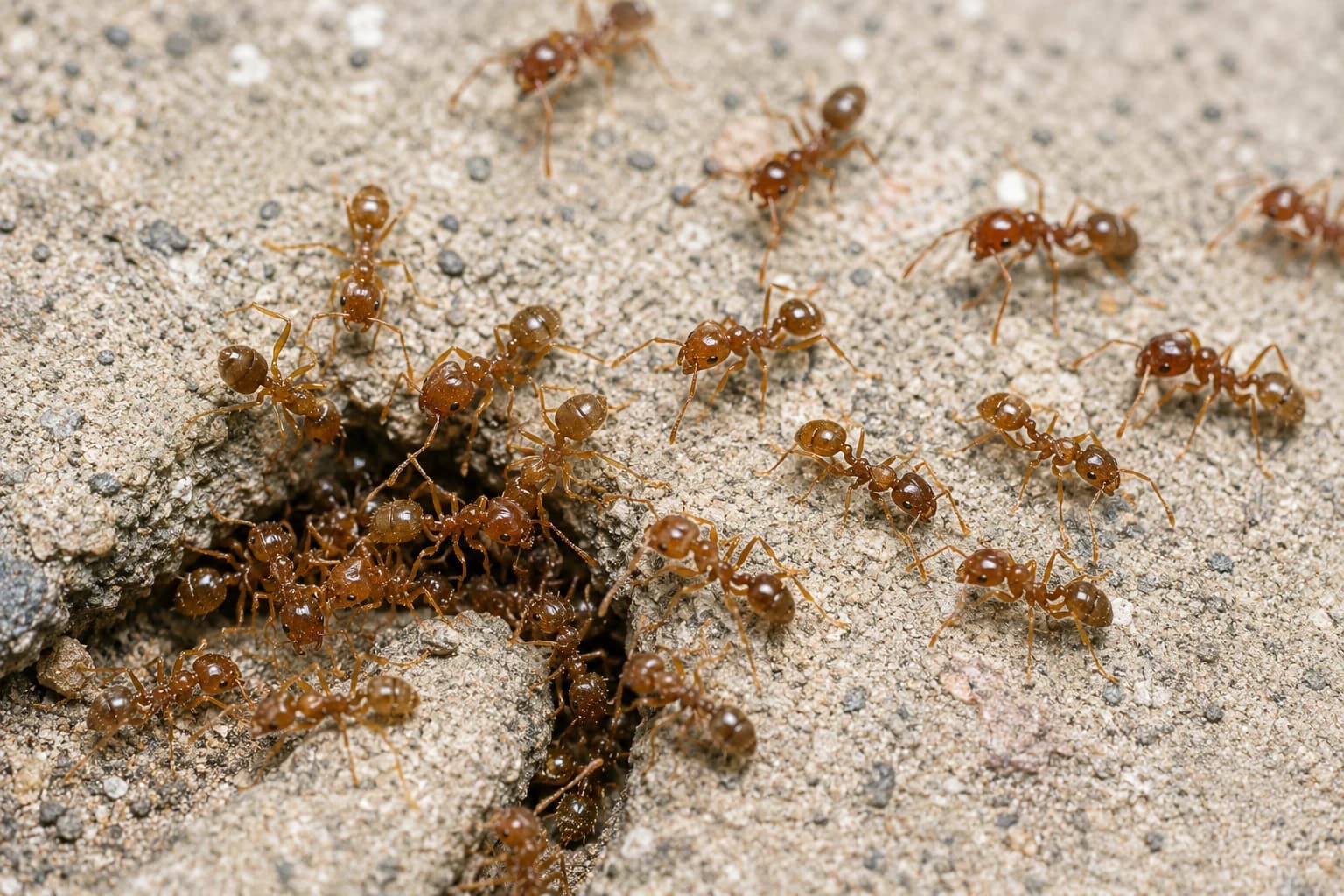
Fire Ants
Fire ants are a serious invasive pest and biosecurity issue in Queensland. They are not a normal household ant problem to ignore or casually disturb.
How to identify fire ants:
- Small coppery-brown ants
- Workers can vary in size
- Aggressive when disturbed
- Painful stings
- Nests may appear as loose mounds of soil
- Mounds often have no obvious entry hole
Where they may be found:
- Lawns
- Parks
- Gardens
- Soil
- Turf
- Mulch
- Garden materials
- Paddocks
- Disturbed ground
Why they are a serious concern:
Fire ants can inflict painful stings on people and animals and can affect agriculture, the environment, outdoor lifestyles and tourism. Queensland Government advises that suspected fire ants or nests should be reported online or by calling 13 22 68. Do not disturb a suspicious nest unless you are following official advice.
If you suspect fire ants, report them to the Queensland fire ant program.
Funnel Ants
Funnel ants are lawn-nesting ants that create small funnel-shaped holes or mounds in soil. They are commonly noticed because of the mess they create in lawns.
How to identify funnel ants:
- Small to medium ants
- Usually noticed because of nest openings
- Funnel-shaped holes or small soil mounds
- Activity in lawns and open soil
- Often more obvious after rain or lawn growth
Where they are usually found:
- Lawns
- Sports fields
- Parks
- Open grassed areas
- Sandy or well-drained soil
- Around paths and garden edges
Why they are a problem:
Funnel ants can make lawns uneven and unsightly. They are mainly a lawn nuisance rather than an indoor food-area pest.
Meat Ants
Meat ants are larger native ants that often build visible outdoor nests and can be aggressive around their nest area.
How to identify meat ants:
- Medium to large ants
- Dark body with reddish tones depending on species
- Strong outdoor trails
- Often associated with open nests
- Can be aggressive around nest entrances
Where they are usually found:
- Lawns
- Open soil
- Rural properties
- Garden edges
- Tracks
- Bushy areas
- Around outdoor food sources
Why they are a problem:
Meat ants can become a nuisance when nests are close to outdoor living areas, walkways, play areas or work zones. They may also bite when disturbed.
Ghost Ants
Ghost ants are tiny ants with pale legs and abdomen, making them hard to see on light surfaces. They may trail indoors around food and moisture.
How to identify ghost ants:
- Very small ants
- Dark head and thorax
- Pale or almost translucent legs and abdomen
- Often hard to see
- Trail around food and moisture
Where they are usually found:
- Kitchens
- Bathrooms
- Pantries
- Benchtops
- Wall voids
- Potted plants
- Moist areas
- Around sinks
Why they are a problem:
Ghost ants can be persistent indoors and may nest in small hidden areas. Because they are tiny, they can enter through very small gaps and may be missed until trails become obvious.
Common Signs of Ant Activity
Ant problems often start with a few visible workers but can quickly become more persistent.
Common signs include:
- Ant trails in kitchens, bathrooms or outdoor areas
- Ants around pet food, bins or food storage
- Small holes in lawns, garden beds or paving gaps
- Soil mounds around paths, pavers or building edges
- Ants appearing after rain or weather changes
- Ants entering through windows, doors, pipes or wall gaps
- Ants around leaking taps, sinks or damp areas
- Painful stings in lawns, gardens or outdoor spaces
- Repeated activity after DIY sprays
- Ants appearing in commercial kitchens, cafes or food areas
Why Ants Are a Problem Locally
Hervey Bay’s warm coastal climate, sandy soils, gardens, lawns, paving and outdoor living areas can all support ant activity. Ants often become worse when there is food, moisture, shelter or repeated access into buildings.
Ants can become a problem locally because they may:
- Enter kitchens, pantries and food areas
- Contaminate food preparation surfaces
- Create soil mounds in lawns and paving
- Sting or bite people and pets
- Nest in wall voids, gardens, roof voids or under pavers
- Reappear after DIY spraying
- Spread through multiple nesting points
- Affect commercial kitchens, cafes, restaurants and rental properties
- Cause concern when fire ants are suspected
The right treatment depends on correct identification. A sugar-feeding indoor ant may require a different strategy from a lawn-nesting ant, a biting green ant or a regulated fire ant.
Ant Bite and Sting Safety
Some ants can bite or sting. Most reactions are local, but some people may have stronger reactions.
General safety tips:
- Avoid disturbing ant nests
- Keep children and pets away from active nests
- Wear shoes in known ant activity areas
- Use gloves when gardening
- Seek medical advice if swelling, pain or symptoms are concerning
- Call Triple Zero (000) if someone has trouble breathing, collapses or shows signs of a severe allergic reaction
For suspected fire ants, do not treat the nest as a normal household ant issue. Report suspected fire ants or nests to the Queensland fire ant program.
Prevention Tips
Ant prevention is about reducing food, water, shelter and access.
Practical steps include:
- Store food in sealed containers
- Clean crumbs, spills and grease daily
- Keep pet food covered and avoid leaving it out overnight
- Empty bins regularly and keep lids closed
- Fix leaking taps, pipes and moisture problems
- Seal gaps around doors, windows, pipes and skirting boards where practical
- Trim vegetation away from walls and rooflines
- Keep lawns and garden edges maintained
- Reduce mulch and leaf litter against building edges
- Avoid disturbing nests before identification
- Clean around outdoor dining and barbecue areas
- Check paving gaps, lawns and garden beds for nesting activity
For businesses, especially food service sites, regular cleaning, waste management and monitoring are important.
Professional Ant Treatment
Professional ant control starts with identification. Treating the wrong ant in the wrong way can make the problem worse, especially if colonies split, scatter or move deeper into a structure.
An ant treatment may include:
- Inspection of trails, entry points and nesting areas
- Identification of the likely ant species
- Targeted baiting where suitable
- Residual treatment to selected areas where appropriate
- Treatment of lawn, paving, building edge or wall void activity when suitable
- Advice on moisture, food sources and access points
- Follow-up recommendations for persistent or large colonies
NoTrace Pest Control provides ant treatment across Hervey Bay and the Fraser Coast for homes, rental properties, outdoor areas, lawns and suitable commercial sites.
Important Note About Fire Ants
Fire ants are a regulated biosecurity concern in Queensland. If you suspect fire ants or a suspicious nest, report it to the Queensland fire ant program online or by calling 13 22 68.
Do not disturb suspicious nests unless following official instructions.
Need Help With Ants?
If you are seeing ants in the kitchen, soil mounds in the lawn, ants under pavers, stinging ants in outdoor areas or repeated activity after DIY sprays, NoTrace can inspect the problem and recommend the right treatment.
Ant problems are easier to manage when the species, nest location and food source are properly understood.