Bed bugs are small blood-feeding insects that hide close to where people sleep or rest. They can affect homes, rental properties, hotels, motels, holiday accommodation, backpacker-style accommodation, units, aged-care settings, second-hand furniture and shared living spaces.
In Queensland, bed bugs can be introduced through luggage, guests, travel, second-hand beds, used furniture, clothing, bags and movement between rooms or units. They are not a sign of poor hygiene. Clean homes and accommodation sites can still get bed bugs if they are carried in.
Bed bugs are difficult to control because they hide in cracks, seams, bed frames, furniture joints, skirting boards and other protected areas. Early identification is important because a small infestation is usually easier to manage than one that has spread through multiple rooms.
NoTrace Pest Control provides bed bug treatment across Hervey Bay and the Fraser Coast for homes, rental properties, accommodation providers and suitable commercial sites.
How to Identify Bed Bugs
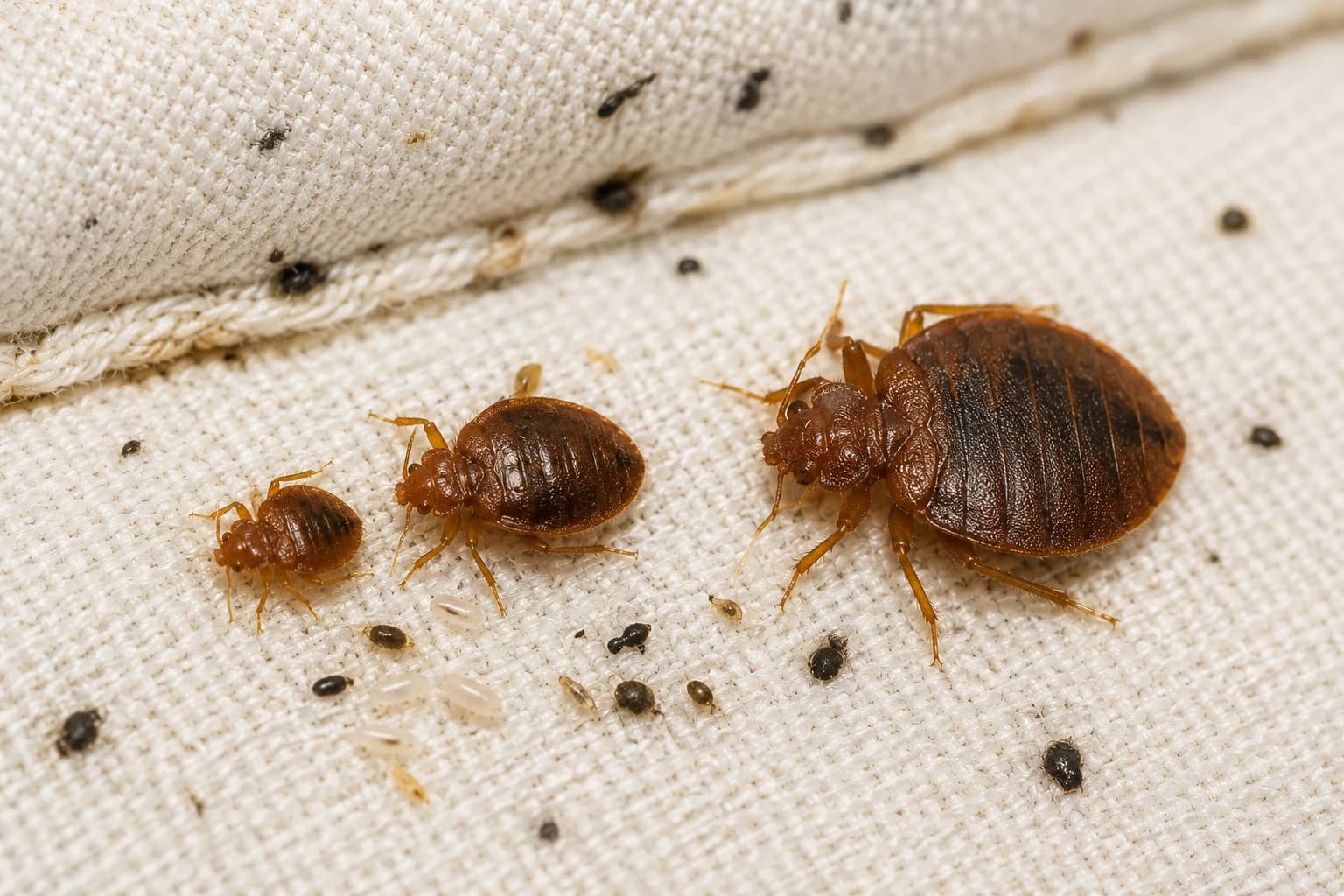
Bed bugs are small, wingless insects with flattened oval bodies. Before feeding, they are usually flat and brownish. After feeding, they may appear darker, reddish-brown and more swollen.
Common bed bug identification features include:
- Small, flat, oval-shaped body
- Brown to reddish-brown colour
- No wings
- Six legs
- Short antennae
- Adults are roughly apple-seed-sized
- Nymphs are smaller and paler
- Eggs are tiny, pale and difficult to see
- Hide close to beds, lounges and resting areas
- Usually active at night
Healthdirect lists common signs of bed bugs as blood spots on sheets or mattresses, bed bugs, insect skins or eggs, brown faecal spotting on mattresses and waking with bites.
Common Bed Bug Types in Queensland
Common Bed Bug
The common bed bug, Cimex lectularius, is one of the two main bed bug species found in Australia. It is a human-biting bed bug that hides close to sleeping and resting areas.
How to identify common bed bugs:
- Small, flat and oval-shaped
- Brown to reddish-brown body
- Adults are about the size of an apple seed
- Nymphs are smaller and paler
- The body becomes darker and more swollen after feeding
- Often found in groups around hiding spots
Where they are usually found:
- Mattress seams
- Bed frames
- Ensemble bases
- Headboards
- Skirting boards
- Bedside tables
- Lounges
- Recliners
- Cracks and screw holes
- Behind wall fixtures
- Luggage and bags
Why they are a problem:
Common bed bugs can bite people while they sleep and hide during the day. They can spread when furniture, luggage, bedding or personal items are moved. DIY sprays can make the issue harder if bed bugs scatter into other cracks, rooms or furniture.
Tropical Bed Bug
The tropical bed bug, Cimex hemipterus, is also found in Australia and is more associated with warmer and tropical regions. Queensland’s warm climate means tropical bed bugs should be considered when identifying bed bug problems.
How to identify tropical bed bugs:
- Similar appearance to common bed bugs
- Small, flat, oval-shaped body
- Brown to reddish-brown colour
- Swells after feeding
- Species-level identification may require magnification or expert confirmation
Where they are usually found:
- Beds and mattresses
- Bed frames and headboards
- Lounges and resting furniture
- Accommodation rooms
- Units and shared housing
- Luggage storage areas
- Cracks close to sleeping spaces
Why they are a problem:
Tropical bed bugs can cause the same kind of infestation issues as common bed bugs. They feed on blood, hide in small cracks and can be moved between locations through luggage, furniture and personal belongings.
Bed Bug Nymphs
Bed bug nymphs are young bed bugs. They are smaller than adults and can be harder to see, especially before feeding.
How to identify bed bug nymphs:
- Very small and pale
- Flattened body
- May become reddish after feeding
- Often found near adults, eggs or faecal spotting
- Hide in seams, cracks and joints
Where they are usually found:
- Mattress seams
- Bed frame cracks
- Headboard joints
- Lounge seams
- Skirting boards
- Screw holes
- Creases in fabric furniture
Why they are a problem:
Nymphs show that bed bugs are breeding. If you are seeing different sizes of bed bugs, the infestation may have been present long enough for eggs to hatch and develop.
Bed Bug Eggs
Bed bug eggs are tiny, pale and difficult to spot without a careful inspection. They are usually hidden in protected cracks and seams.
How to identify bed bug eggs:
- Tiny and pale
- Often whitish or cream-coloured
- Usually found in clusters or hidden lines
- Stuck to surfaces in cracks or seams
- Easy to miss during casual cleaning
Where they are usually found:
- Mattress seams
- Bed frame joints
- Screw holes
- Headboards
- Skirting cracks
- Furniture seams
- Creases in lounges and chairs
Why they are a problem:
Eggs are one reason bed bugs can be difficult to eliminate. Treatment needs to account for hidden eggs and newly emerging nymphs, not just visible adult bed bugs.
Bed Bug Cast Skins
As bed bugs grow, they shed their skins. These shed skins can be an important sign of an infestation.
How to identify bed bug cast skins:
- Pale, dry, empty insect shells
- Similar shape to bed bugs
- Often found near hiding places
- May collect around seams, cracks or corners
- Usually seen with other signs such as spotting or live insects
Where they are usually found:
- Mattress seams
- Bed base edges
- Headboards
- Lounges
- Cracks near beds
- Around skirting boards
- Inside furniture joints
Why they are a problem:
Cast skins indicate bed bugs have been developing and moulting. This often means the issue is established rather than a single recent introduction.
Common Signs of Bed Bug Activity
Bed bugs can be difficult to detect early because they hide during the day and feed when people are resting.
Common signs include:
- Bites after sleeping or resting
- Blood spots on sheets, pillowcases or mattresses
- Brown or black faecal spotting on mattress seams or bed frames
- Live bed bugs in seams, cracks or furniture joints
- Pale eggs in protected crevices
- Shed skins near hiding spots
- Dark spotting around bed heads, skirting boards or screw holes
- A sweet, musty or unpleasant odour in heavier infestations
- Bugs found after travel, visitors or second-hand furniture
- Repeated bites despite washing bedding
Somerset Regional Council notes that blood spotting on mattresses or furnishings and a distinctive sickly-sweet or stink-bug smell can be signs of infestation.
Common Bed Bug Hiding Places
Bed bugs prefer to hide close to where people sleep or sit for long periods.
Check these areas carefully:
- Mattress seams and labels
- Bed base corners
- Ensemble bases
- Headboards
- Bed frame joints
- Screw holes and cracks
- Bedside tables
- Skirting boards behind beds
- Lounges and recliners
- Curtains near beds
- Picture frames near sleeping areas
- Luggage and travel bags
- Wardrobes near beds
- Power point edges and wall fixtures
- Cracks in timber furniture
Bed bugs can spread further away from the bed as an infestation grows. In heavier cases, they may be found in multiple rooms.
Why Bed Bugs Are a Problem Locally
Hervey Bay and the Fraser Coast have holiday accommodation, tourism, rental properties, shared housing, second-hand furniture movement and regular travel. These are all situations where bed bugs can be introduced and moved between locations.
Bed bugs can become a problem because they may:
- Bite people while they sleep
- Cause itching, irritation and sleep disruption
- Hide in small cracks where they are difficult to reach
- Spread through luggage, furniture and bedding
- Affect rental properties and accommodation businesses
- Lead to guest complaints and reputation issues
- Persist after DIY treatment if harbourage areas are missed
- Move into nearby rooms when disturbed incorrectly
Bed bugs are not limited to dirty properties. They are hitchhiking pests and can be introduced into clean homes, hotels and rentals through normal movement of people and belongings.
Bed Bug Bites and Health Concerns
Bed bug bites affect people differently. Some people react strongly, while others may have little or no visible reaction.
Possible signs include:
- Red itchy spots
- Bites in lines or clusters
- Bites on exposed skin such as arms, shoulders, legs or neck
- Irritation after sleeping
- Scratching may lead to secondary skin infection
- Anxiety or difficulty sleeping
Healthdirect says bed bug bites can cause red, itchy spots up to 2 cm wide, often on exposed skin such as arms and shoulders, and that signs of infestation can include regularly waking with bites.
Seek medical advice if bites become infected, swelling is severe, symptoms are unusual, or you are concerned about a reaction.
What Not To Do With Bed Bugs
Bed bugs are easy to spread if handled incorrectly.
Avoid these mistakes:
- Do not move mattresses or furniture through the house without advice
- Do not place infested furniture on the street where others may collect it
- Do not spray random household insecticides over beds and bedding
- Do not sleep in another room without advice, as this may spread activity
- Do not rely only on washing sheets if bed bugs are in the frame or furniture
- Do not ignore small signs, as early infestations can grow
- Do not assume bites alone confirm bed bugs without finding physical evidence
If you suspect bed bugs, try to collect clear photos or a sample in a sealed container if safe to do so. This can help with identification.
Prevention Tips
Bed bug prevention is about reducing the chance of bringing them home and catching signs early.
Practical steps include:
- Inspect hotel beds and mattress seams when travelling
- Keep luggage off beds and soft furniture where possible
- Check luggage after travel
- Wash and dry travel clothing on suitable heat settings where safe for fabrics
- Inspect second-hand beds, lounges and furniture before bringing them inside
- Avoid picking up discarded mattresses or furniture from the street
- Reduce clutter around beds to make inspection easier
- Use mattress and ensemble encasements where suitable
- Check rental or accommodation rooms if bites appear
- Act early if spotting, cast skins or live bugs are found
For accommodation providers, regular inspection procedures and staff training can help identify issues before they spread.
Professional Bed Bug Treatment
Professional bed bug treatment starts with careful inspection and confirmation. Treatment depends on the size of the infestation, how many rooms are affected and where bed bugs are hiding.
A bed bug treatment may include:
- Inspection of beds, furniture and surrounding areas
- Identification of live bugs, eggs, spotting and cast skins
- Treatment of bed frames, cracks, seams and harbourage points
- Advice on preparation before treatment
- Guidance on laundering and handling bedding or clothing
- Follow-up planning where needed
- Recommendations to reduce the spread between rooms
- Commercial reporting is required for accommodation or rental properties.
AEPMA notes that bed bug treatment strategies depend on whether the infestation is introductory, established, growth-stage or spreading, and that the property owner’s involvement is essential.
NoTrace Pest Control provides bed bug treatment across Hervey Bay and the Fraser Coast for homes, rental properties, accommodation providers and suitable commercial sites.
Important Note About Accommodation and Rentals
Bed bugs can spread quickly in accommodation and rental environments if they are not handled carefully. Early reporting, proper inspection and clear treatment instructions are important.
For property managers, landlords and accommodation providers, keep records of:
- Rooms affected
- Inspection findings
- Guest or tenant reports
- Treatment dates
- Follow-up recommendations
- Furniture or linen handling advice
This helps reduce confusion and supports better control.
Need Help With Bed Bugs?
If you are waking with bites, seeing dark spotting on mattress seams, finding live insects near the bed, or dealing with a suspected issue after travel or second-hand furniture, NoTrace can inspect the problem and recommend the right treatment.
Bed bug problems are easier to manage when they are identified early and treated before they spread through multiple rooms.