Rodents are a common pest issue around Queensland homes, rental properties, restaurants, sheds, roof voids, farms, shops and commercial buildings. In Hervey Bay and the Fraser Coast, rodent activity is often linked to food sources, roof access, gaps around buildings, bins, pet food, vegetation, sheds, garages and nearby wildlife corridors.
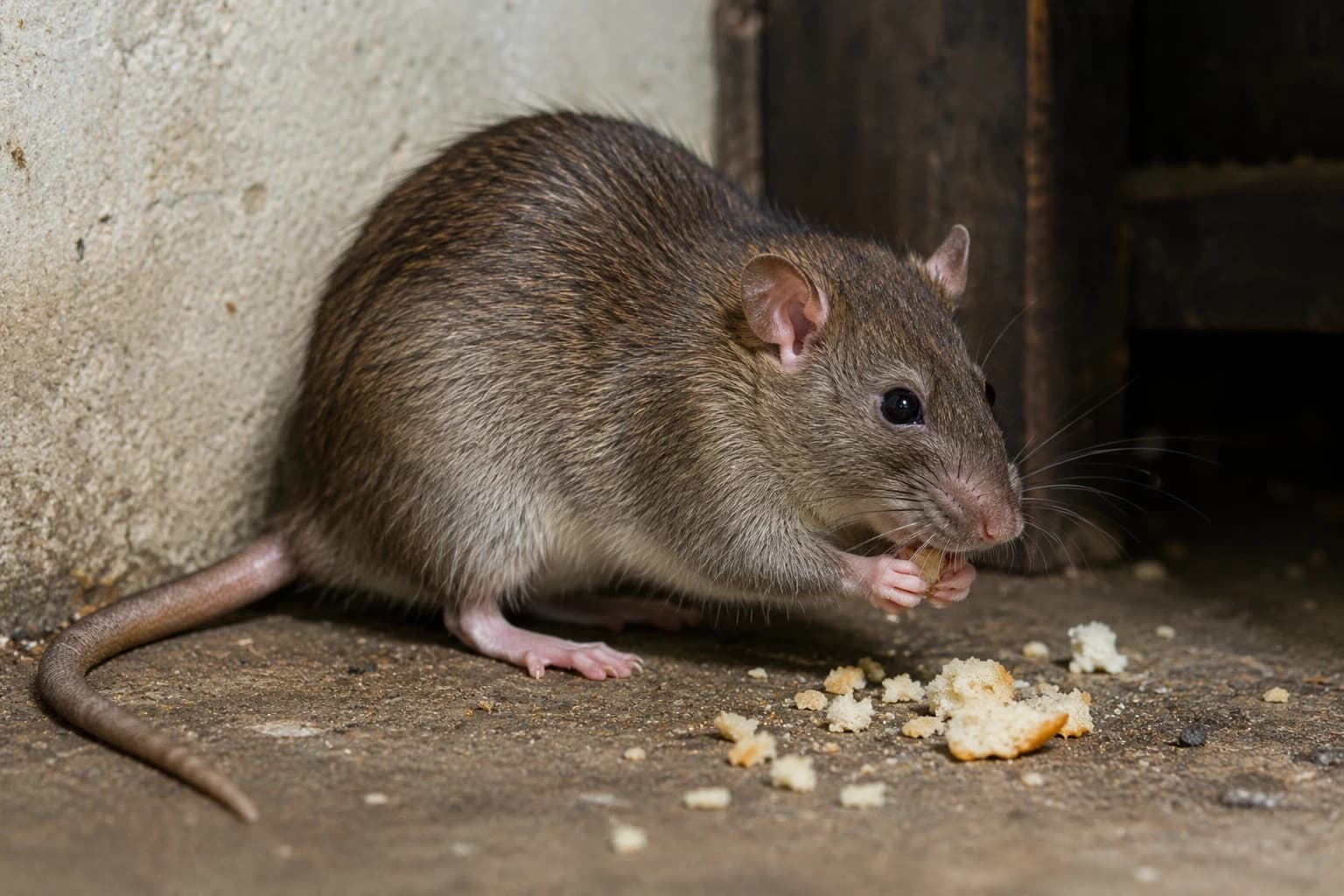
The main pest rodent species treated around homes and businesses are introduced species: roof rats, Norway rats, and house mice. These are different from native rodents, which are protected and should not be treated as normal pest animals without proper identification.
Correct identification matters. A rodent in the roof, a mouse in the pantry, a rat around bins and a native rodent near bushland may all need different advice.
NoTrace Pest Control provides rodent control across Hervey Bay and the Fraser Coast for homes, rental properties, roof voids, sheds, small businesses and commercial sites.
How to Identify Rodent Activity
Rodents are often heard or detected before they are seen. Many rodent problems begin in roof voids, wall gaps, kitchens, sheds, garages, subfloors or outdoor storage areas.
Common rodent identification signs include:
- Scratching, chewing or running noises in the roof or walls
- Droppings in cupboards, drawers, roof voids, sheds or garages
- Chewed food packaging
- Gnaw marks on timber, plastic, wiring or stored items
- Greasy rub marks along walls, beams or regular travel paths
- Nesting material such as shredded paper, insulation or fabric
- Strong urine or musky odours
- Pet behaviour focused on walls, cupboards or ceiling areas
- Fruit, pet food, bird seed or stored food being eaten
- Burrows, tracks or repeated activity around bins and sheds
Rodent droppings, body size, climbing behaviour, and the location of activity can help identify whether the issue is likely to be rats, mice, or another animal.
Common Rodent Types in Hervey Bay & Queensland
Roof Rat / Black Rat
Roof rats, also called black rats, are one of the most common pest rats found around buildings. They are excellent climbers and are often linked to roof voids, wall cavities, trees, vines, fences and overhead access points.
How to identify roof rats:
- Slender body
- Large ears compared with head size
- Pointed nose
- Long tail, often longer than the body
- Usually dark brown, grey-brown or blackish
- Agile climber
Where they are usually found:
- Roof voids
- Wall cavities
- Trees and palms
- Vines and creepers
- Fences
- Sheds
- Garages
- Ceiling spaces
- Around fruit trees
- Commercial kitchens and storage areas
Why they are a problem:
Roof rats can contaminate food areas, chew wiring, damage insulation, and create noise in ceilings at night. They often enter buildings from above, so control should include checking rooflines, trees, branches, pipes and other access points.
Norway Rat / Brown Rat / Sewer Rat
Norway rats, also called brown rats or sewer rats, are heavier-bodied rats often linked to ground-level activity, burrows, drains, bins and damp areas.
How to identify Norway rats:
- Larger, heavier body than roof rats
- Blunt nose
- Smaller ears compared with body size
- Tail usually shorter than the body
- Brown or grey-brown colouring
- Strong burrowing behaviour
Where they are usually found:
- Around bins
- Sheds and garages
- Subfloors
- Drains
- Burrows near walls or gardens
- Compost areas
- Commercial waste zones
- Ground-level storage areas
- Chicken coops or feed areas
Why they are a problem:
Norway rats can contaminate food, damage materials, burrow around structures and create strong odours. They are often associated with poor waste access, harbourage, food sources and damp shelter.
House Mouse
House mice are small rodents that can enter buildings through very small gaps. They are common around kitchens, pantries, food storage, sheds, garages and commercial premises.
How to identify house mice:
- Small body
- Pointed nose
- Large ears for body size
- Long thin tail
- Grey-brown colouring
- Small droppings, usually much smaller than rat droppings
Where they are usually found:
- Kitchens
- Pantries
- Cupboards
- Sheds
- Garages
- Storage rooms
- Wall voids
- Behind appliances
- Around pet food
- Commercial food storage areas
Why they are a problem:
House mice can contaminate food, chew packaging and breed quickly where food and shelter are available. Because they are small, they can enter through gaps that may not look large enough for a rodent.
Native Bush Rats
Bush rats are native Australian rodents. They may be found around bushland, gardens, vegetation and natural areas. They are not the same as the introduced pest rats.
How to identify native bush rats:
- More compact body than the roof rats
- Shorter tail than many introduced rats
- Rounded face
- Often found close to natural vegetation
- Usually not strongly associated with indoor kitchen activity
Where they are usually found:
- Bushland edges
- Dense gardens
- Leaf litter
- Natural vegetation
- Coastal or semi-natural blocks
- Around logs, ground cover and vegetation
Why identification matters:
Native rodents are protected. If a rodent is found near bushland or natural habitat, especially if it does not match typical roof rat, Norway rat or house mouse behaviour, identification should be handled carefully before any control action is taken.
Water Rat / Rakali
The water rat, also called rakali, is a native Australian rodent associated with waterways. It is much larger than a house mouse and is generally found near aquatic environments.
How to identify water rats:
- Larger native rodent
- Often dark brown to grey-brown
- Partly aquatic behaviour
- Tail may have a pale or white tip
- Strong swimmer
- Usually found near water
Where they are usually found:
- Creeks
- Rivers
- Wetlands
- Dams
- Lakes
- Mangrove edges
- Coastal waterways
- Drainage areas with natural habitat
Why identification matters:
Water rats are native wildlife, not a standard household pest. They should not be confused with sewer rats simply because they are near water. If a rodent is near a creek, wetland or waterway, identification matters before control is considered.
Water Mouse / False Water Rat
The water mouse, also known as the false water rat, is a rare native rodent associated with coastal and estuarine environments. It is not a normal household pest control target.
How to identify water mice:
- Native coastal rodent
- Usually associated with mangroves, saltmarsh or estuarine environments
- Nocturnal
- May use mud nests or coastal habitat
- Identification should be left to wildlife or environmental specialists
Where they are usually found:
- Mangroves
- Saltmarsh
- Coastal wetlands
- Estuarine areas
- Tidal environments
- Protected coastal habitat
Why identification matters:
The water mouse is a native species associated with sensitive coastal habitat. If unusual rodents are found around mangroves, wetlands or coastal environmental areas, seek proper identification rather than treating them as pest rats.
Pale Field Rat
Pale field rats are native rodents associated with grassy areas, coastal regions and rural environments. They are not usually the same as roof rats, Norway rats or house mice in buildings.
How to identify pale field rats:
- Native rat species
- Usually associated with grassland or field-style habitat
- Pale brown to sandy colouring
- Ground-level activity
- May create burrows or runways
Where they are usually found:
- Grasslands
- Coastal fields
- Rural blocks
- Paddocks
- Long grass
- Natural ground cover
- Semi-rural areas
Why identification matters:
Pale field rats are native and should not be treated the same way as introduced pest rodents. If rodent activity is occurring in long grass or semi-natural areas rather than inside a building, proper identification is important.
Swamp Rat
Swamp rats are native rodents usually associated with dense vegetation, wet areas and natural habitat. They may be found in suitable Queensland environments, but are not a common indoor pest.
How to identify swamp rats:
- Native rodent
- Usually stockier and ground-dwelling
- Dark brown to grey-brown fur
- Associated with dense cover and damp habitat
- Often stays close to vegetation
Where they are usually found:
- Wetlands
- Dense grass
- Swampy areas
- Creek lines
- Vegetated drainage zones
- Bushland edges
- Natural ground cover
Why identification matters:
Swamp rats are native wildlife. If the activity is outside in dense vegetation or near wet areas, avoid assuming it is a sewer rat without proper identification.
Antechinus and Other Rodent Lookalikes
Antechinus are small native marsupials, not rodents. They can sometimes be mistaken for mice because of their size and shape.
How to identify antechinus:
- Small mouse-like native marsupial
- Pointed snout
- Often more active in natural areas
- May enter buildings near bushland
- Behaviour can differ from house mice
Where they are usually found:
- Bushland edges
- Gardens
- Sheds
- Wall gaps near natural habitat
- Timber or stored materials
- Areas close to vegetation
Why identification matters:
Antechinus are native animals and should not be treated as pest mice. If the animal looks mouse-like but is found near bushland, especially where native wildlife is common, proper identification is important.
Common Signs of Rodent Activity
Rodent problems can develop quietly before becoming obvious.
Common signs include:
- Scratching, chewing or running noises in the roof at night
- Droppings in cupboards, drawers, pantries, roof voids or garages
- Chewed food packaging
- Gnaw marks on wiring, timber, plastic or stored goods
- Greasy rub marks along walls, pipes or beams
- Urine smell or musky odour
- Nests made from insulation, paper, fabric or grass
- Burrows near walls, sheds, bins or garden edges
- Damaged fruit, bird seed or pet food
- Pets staring at walls, cupboards, appliances or ceilings
- Rodents seen along fences, rooflines, sheds or outdoor areas
- Activity around commercial kitchens, bins or storage rooms
Why Rodents Are a Problem Locally
Hervey Bay and the Fraser Coast provide many conditions that can support rodent activity, including warm weather, roof voids, sheds, gardens, outdoor pets, food waste, fruit trees, bird seed, coastal vegetation and older building gaps.
Rodents can become a problem because they may:
- Contaminate food and food preparation surfaces
- Damage wiring, insulation and stored goods
- Chew through packaging, plastics and soft materials
- Create noise in roof voids and walls
- Leave droppings and urine around homes or businesses
- Affect restaurants, cafes, shops and rental properties
- Enter buildings through small gaps or roof access points
- Attract fleas, ticks or mites in some situations
- Reappear when food, water, shelter or entry points remain
Queensland food business guidance recommends pest-proofing doors and entrances, sealing drains and pipe penetrations, and preventing rats and mice from entering food handling areas.
Health and Safety Concerns
Rodents should be taken seriously because they can contaminate food, surfaces and storage areas.
General safety tips:
- Avoid handling rodent droppings or dead rodents with your bare hands
- Wear gloves when cleaning contaminated areas
- Do not sweep dry droppings into the air
- Keep children and pets away from contaminated areas
- Discard food packaging that has been chewed or contaminated
- Seek advice if there is heavy contamination in a roof void, kitchen, pantry or commercial site
- Use care when accessing roof voids or confined spaces
Rats and mice can damage food and contaminate it, and Queensland council guidance notes that they may carry organisms associated with diseases such as leptospirosis and salmonella.
Prevention Tips
Rodent prevention is about removing food, shelter and access.
Practical steps include:
- Store food in sealed containers
- Keep pet food sealed and avoid leaving it out overnight
- Clean up crumbs, spills and food waste
- Keep bins closed and away from entry points where practical
- Trim branches away from rooflines
- Remove climbing access from vines, creepers and overgrown vegetation
- Seal gaps around pipes, doors, vents and wall penetrations
- Fit door sweeps where gaps exist under doors
- Store bird seed, chicken feed and pet food securely
- Reduce clutter in sheds, garages and storage rooms
- Keep lawns and garden edges maintained
- Remove fallen fruit from the yard
- Check roof voids and sheds for droppings or nesting material
- Repair damaged vents, screens and access panels
For commercial food businesses, waste management, sealed storage, routine inspections and pest-proofing are especially important.
Professional Rodent Control
Professional rodent control starts with identifying the likely species, where the activity is occurring and how rodents are getting access.
A rodent control program may include:
- Inspection of roof voids, entry points and activity areas
- Identification of likely rat or mouse activity
- Bait station placement where suitable
- Rodent monitoring
- Advice on proofing and sealing entry points
- Recommendations for food, waste and storage practices
- Commercial documentation where needed
- Follow-up planning for heavy or ongoing activity
Rodent control is most effective when treatment is combined with proofing, sanitation and removal of harbourage.
NoTrace Pest Control provides rodent control across Hervey Bay and the Fraser Coast for homes, rental properties, roof voids, sheds, garages, small businesses and commercial sites.
Important Note About Native Rodents
Not every rat or mouse-like animal is a pest rodent. Queensland has native rodents and other native animals that can be mistaken for pest rats or mice.
Native species may be protected. If the animal is found around bushland, wetlands, mangroves, coastal vegetation or natural habitat, proper identification is important before control measures are taken.
If you are unsure what type of rodent you have, NoTrace can inspect the signs and help determine whether the issue appears consistent with pest rats or mice.
Need Help With Rodents?
If you are hearing scratching in the roof, finding droppings in cupboards, seeing gnaw marks, or noticing rodent activity around sheds, bins or commercial areas, NoTrace can inspect the property and recommend the right control plan.
Rodent problems are easier to manage when the species, entry points, food sources and harbourage areas are properly understood.