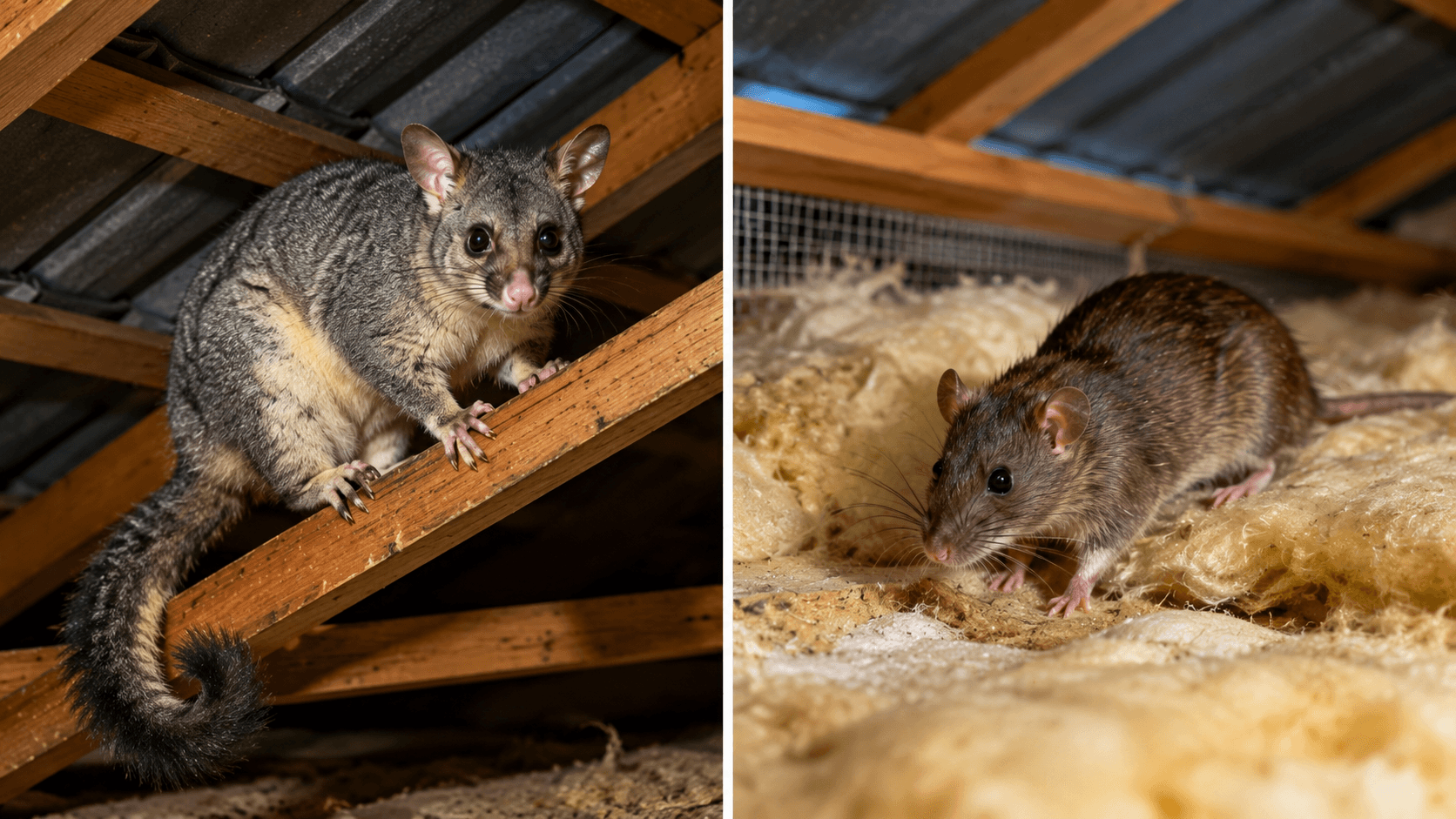
Hearing scratching in the roof at night can be frustrating, worrying, and downright hard to ignore. In many cases, homeowners assume it’s a possum, but sometimes the real culprit is a roof rat. The signs can overlap, but once you know what to look for, it becomes much easier to work out what’s going on.
In Queensland, that matters because possums are protected native animals and must be handled differently from rats. So before you block a gap, set a trap, or call for help, it’s worth figuring out which critter is actually sharing your roof space.
Why do animals move into roofs?
Roofs, ceiling cavities, and wall spaces offer warmth, shelter, and protection from predators. For possums, a roof can feel like a safe daytime den. For rats, it can be the perfect place to nest, travel, and feed unnoticed.
A roof problem usually starts with an opening somewhere on the property. Broken tiles, gaps under eaves, loose vents, damaged flashing, or holes around pipes can all become entry points. Once an animal finds its way in, it often returns again and again unless the access point is properly fixed.
Possum or roof rat?
This is the question most homeowners ask first, and it’s an important one. Possums and roof rats can both live in roof spaces, but they usually leave different clues behind.
Possums are larger, so the movement tends to sound heavier. Roof rats are smaller and quicker, so the noise is often lighter and more rapid. If you hear thumping or slow scratching overhead, that leans toward a possum. If it sounds like fast scurrying or movement racing across the ceiling, a rat becomes more likely.
How to tell the difference
Droppings are one of the easiest clues to check. Possum droppings are usually larger and thicker, often with more rounded ends, while rat droppings are smaller, darker, and more pellet-like.
Possum droppings are often found in small clusters near a resting place. Rat droppings are more likely to appear scattered along travel routes, near food sources, or around nesting areas. A strong musky smell can also point toward possum activity, while gnaw marks, greasy rub marks, and shredded nesting material are more typical of rats.
What the droppings can tell you
A quick look at the droppings can help you narrow things down before calling for service. As a general guide, possum poo is bigger and chunkier, while rat droppings are much smaller and more pointed. That difference is often enough to separate a possum problem from a rodent problem.
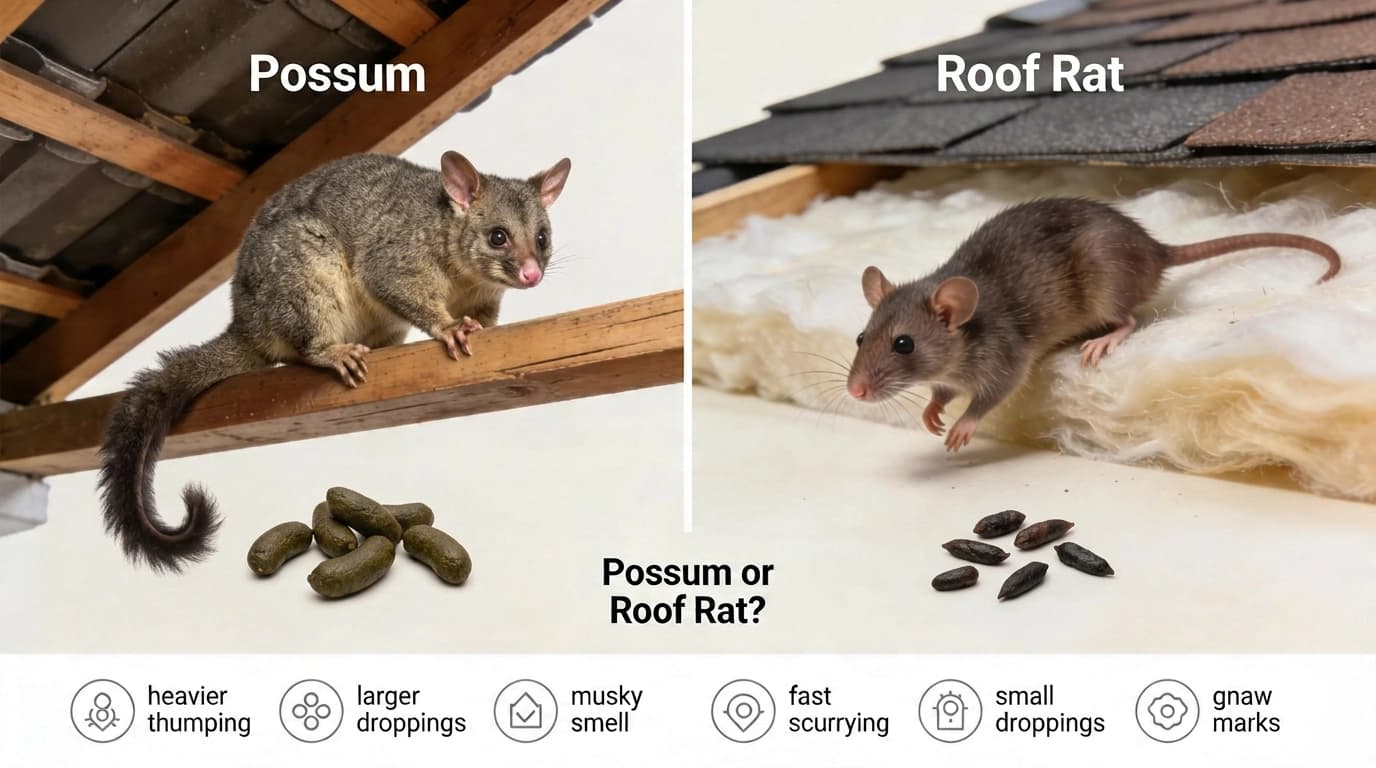
Queensland also has a useful wildlife-droppings reference that can help you compare what you’ve found with native animal scat examples. That can be handy if you’re trying to confirm whether the mess in the roof, yard, or along the fence line is from a possum or something else.
Other signs to watch for
Possums usually leave signs of a larger animal. That can include heavier noises, strong smells, droppings in one spot, and damage to insulation or roof access points. They may also scratch or push at the same opening repeatedly if they are trying to get back in.
Roof rats behave differently. They’re much smaller, so they can squeeze through tiny gaps and often leave chewed materials, wire damage, nesting debris, and lighter movement noises. If you see evidence of gnawing or small holes around the roofline, a rat problem becomes more likely.
Why it matters
It’s important to identify the animal correctly because possums and rats are handled very differently. Possums are protected wildlife in Queensland, so removal and handling must follow the rules. Rats, on the other hand, are managed as pests using a completely different approach.
That means a guess can lead to the wrong fix. If you treat a possum problem like a rat issue, or the other way around, the real source of the noise may stay in place and keep coming back.
Queensland possum rules
Queensland has clear rules around possum removal. Possums cannot simply be trapped and moved far away, and any trapped possum must be released within 25 metres of where it was caught. That protects the animal and also reflects the fact that possums are territorial creatures that usually stay close to home.
The safest approach is to identify how the animal is getting inside, then make sure the exit and entry points are managed properly. If the possum is removed but the roof opening stays unsecured, another animal may move in soon after.
Why DIY removal often fails
A lot of homeowners try to solve the issue by sealing the first gap they see. That can work in some situations, but if the animal is still inside the roof when the opening is closed, it can trap the animal in place. That creates a bigger problem and often more damage.
On the other hand, if the animal is gone but the gap is left open, the same issue can return quickly. Good wildlife and pest control is really about timing, proofing, and making the home less attractive for future visitors.
A simple homeowner checklist
If you’re trying to work out what’s in the roof, this quick checklist can help:
- Heavy thumping or slower scratching usually points to a possum.
- Light scurrying or fast movement is more likely a roof rat.
- Larger clustered droppings are more likely to be possum droppings.
- Small, pointed, scattered droppings are more likely rat droppings.
- Strong musky smell and one resting spot often suggest possum activity.
- Chewed wires, gnaw marks, and nesting debris often suggest rats.
What to do next
The best next step is to inspect the signs carefully before making any repairs. Check for droppings, sound patterns, smell, entry holes, and any visible damage around the roofline. If you’re still unsure or if the problem keeps returning, it’s worth getting a professional to assess it properly.
That way, the animal is identified correctly, the right legal and humane approach is used, and the entry point can be fixed properly. In the long run, that saves time, stress, and repeat visits to the same noisy roof problem.
Need help with a roof visitor?
If you’ve got scratching overhead and you’re not sure whether it’s a possum or a rat, NoTrace Pest Control can help you work it out and deal with it the right way. The sooner the problem is identified, the easier it is to stop the noise, prevent damage, and protect your home.
Need pest control help?
I'm here to help with all your pest control needs on the Hervey Bay & Fraser Coast. Get in touch for a free quote.